
Prescreen and Audition Guidance (2026 Guide)
Quick Answer
Strong prescreen and audition guidance starts early and stays structured. Prescreens are often the first gate in music school admissions, and weak recordings end the process before a live audition is offered. A clear plan for repertoire, recording quality, mock auditions, and studio alignment gives you a measurable edge.
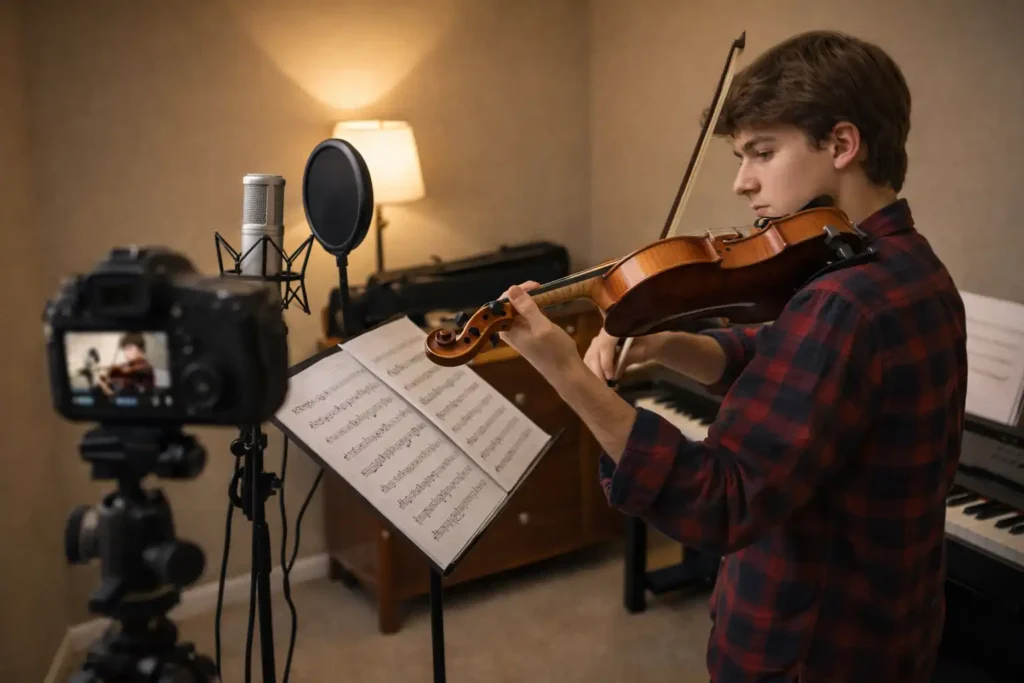
Why Prescreens Matter More Than Most Students Realize
Many applicants focus only on the live audition. That’s a mistake.
At competitive programs, prescreens eliminate a significant portion of applicants before faculty ever schedule a live audition. In practical terms, the prescreen is often the real first audition.
If you rush this stage, nothing that follows matters.
For context on competitiveness, review:
Truth About Music School Acceptance Rates (2026 Guide)
Understanding the Prescreen Stage
What Is a Prescreen
A prescreen is a recorded audition submitted in advance of live audition invitations. Faculty review recordings and decide who advances.
Typical requirements include:
Specific repertoire selections
Unedited video recordings
Technical format guidelines
Strict deadlines
Each school sets its own criteria. Read them carefully.
What Faculty Listen For
Faculty are not only evaluating accuracy. They are listening for:
Musical maturity
Tone quality
Rhythmic stability
Stylistic understanding
Technical consistency
Growth potential
They are asking one question: Is this student ready for studio-level work here
Prescreen Strategy: What Strong Applicants Do Differently
Choose Repertoire Strategically
Select works that highlight strengths, fit your technical profile, and align with program expectations.
Difficulty alone does not impress. Control and clarity do.
Plan Recording Early
Schedule recording sessions at least several weeks before the deadline.
Build in time for:
Multiple takes
Listening and review
Technical corrections
Re-recording if necessary
Last-minute uploads show.
Control the Recording Environment
Use good lighting, stable camera positioning, clear audio capture, and a quiet, distraction-free space. Faculty should focus on musicianship, not production problems.
Perform, Don’t Just Execute
A technically clean but emotionally flat recording is forgettable. Even in prescreens, musical communication matters.
Transitioning from Prescreen to Live Audition
If you receive a live audition invitation, preparation shifts. Faculty are evaluating consistency under pressure, responsiveness, professionalism, and artistic identity. The live audition confirms what the prescreen suggested.
Live Audition Guidance
Mock Auditions Under Real Conditions
Simulate walking into the room, introducing repertoire, performing without stopping, and handling minor mistakes. Record these sessions. Review them objectively.
Mental Preparation
Nerves are normal.
Strong applicants develop pre-performance routines, practice performing while slightly uncomfortable, and focus on musical intent rather than perfection. Confidence grows from preparation, not mindset tricks alone.
Faculty Interaction
Be concise and professional. If asked to start at a different section, respond calmly. Faculty are testing adaptability.
Common Prescreen Mistakes
Waiting Too Long to Record
You cannot fix months of preparation in one session.
Ignoring Technical Instructions
The wrong file format or camera angle can lead to disqualification.
Choosing Flash Over Control
Faculty prefer reliable musicianship to flashy instability.
Submitting Only One Take Option
Strong candidates give themselves multiple usable takes.
Common Live Audition Mistakes
Over Correcting Mid Performance
Do not stop unless instructed.
Playing Safe After a Small Error
Continue musically. Faculty care about recovery.
Treating the Audition Like a Competition Instead of a Conversation
You are being evaluated for studio fit, not compared on a scoreboard in real time.
How Prescreen and Audition Guidance Connects to Your School List
Preparation must align with your school list strategy. If repertoire requirements conflict across programs, adjust early. If studio expectations differ, adapt interpretation appropriately.
If you have not built a balanced list, start here:
Music School List Strategy
For a broader preparation sequence, review:
Music School Audition Timeline
Frequently Asked Questions
Are prescreens more important than live auditions
At many schools, yes. If you do not pass the prescreen, the live audition never happens.
How many takes should I record for a prescreen
Record enough to evaluate and select the strongest full performance. Rarely is the first take the best.
Should prescreen recordings be professionally edited
Most programs prohibit edits. Always follow school-specific instructions.
When Individualized Prescreen Strategy Helps
If you are unsure about repertoire selection, recording quality, school-specific expectations, or studio alignment, structured guidance can prevent avoidable eliminations at the prescreen stage.
Explore:
Music School Admissions Consulting Services
Data and Policy Note
Prescreen requirements, deadlines, and recording rules vary by institution and can change annually. Always confirm directly with each school’s official admissions page.