
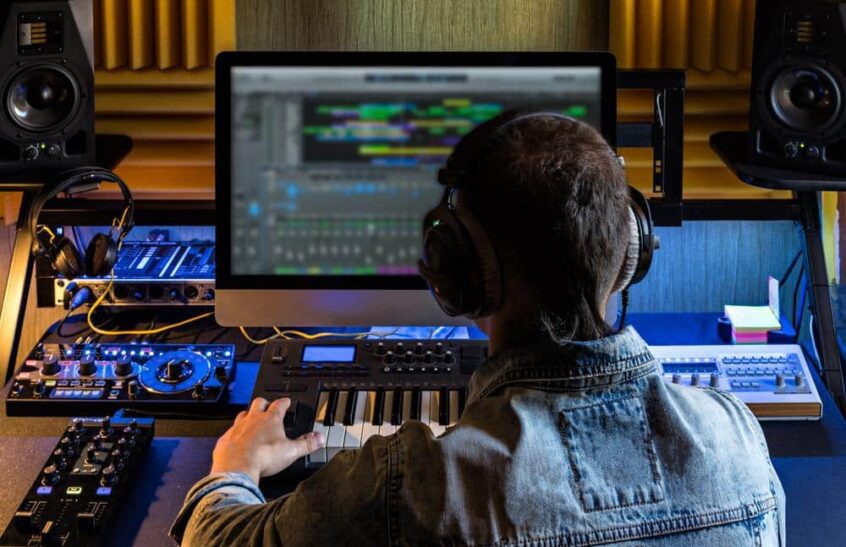
Dreaming of a music production or music technology degree? Getting into the best programs takes more than a home studio and good ears. Top schools want to see technical skill, creative voice, and a portfolio that proves both. College Music Major helps aspiring producers find their best-fit programs and build applications that stand out — guided by an expert who helped shape popular-music education itself.
Why music production admissions are their own challenge
Music production and music technology admissions don’t look like classical performance admissions. Depending on the program you may face:
- A portfolio of original productions, mixes, or compositions — often the single most important element.
- A technical or musicianship assessment (theory, ear training, or a DAW/production task).
- An interview about your creative process and goals.
- Sometimes a performance audition on a primary instrument, sometimes not.
Requirements vary widely between a conservatory’s contemporary program, a university music-technology degree, and an industry-focused school — and knowing those differences is half the battle.
What top production programs look for
- A distinct creative voice in your portfolio, not just clean technique.
- Musical foundation — theory, arrangement, and ear, even in tech-forward programs.
- Evidence you’ll thrive in that specific program’s culture and tools.
- A portfolio curated for the school, not a generic reel.
How College Music Major helps producers get in
- Best-fit program list. We map the real differences between production, music technology, audio engineering, and contemporary/commercial degrees, and target the ones that fit your goals.
- Portfolio strategy. We help you decide what to include, how to sequence it, and how to present your strongest, most original work.
- Application, essay, and interview prep tailored to production applicants.
- Honest expert evaluation of where you stand — and how to get stronger.
Why Dr. Fish for music production
Dr. David Lee Fish is a PhD musician and former music department chair who co-founded the Association for Popular Music Education and built a pioneering popular-music program. For a producer or music-tech applicant, that means guidance from someone who understands contemporary music education from the inside — not just classical admissions. He’s also the recurring cover-story author on the best music schools for In Tune Monthly.
Ready to get in?
If a music production or music technology degree is your goal, let’s build the plan to get you there.
FAQ
What do music production programs require for admission?
It varies, but most emphasize a portfolio of your original productions or mixes, and many add a technical/musicianship assessment and an interview. Some require a performance audition; some don’t. Always check each program.
Do I need to play an instrument to major in music production?
Often it helps but isn’t always required. Some programs expect a performance audition; others focus on your portfolio and musicianship. A strong musical foundation matters at nearly all of them.
What’s the difference between music production and audio engineering degrees?
Production degrees lean toward the creative craft of making music; audio engineering leans toward the technical craft of recording and sound. Many careers blend both, and program names don’t always match their content — which is why fit matters.
How important is my portfolio for music production admissions?
Usually it’s the most important element. A curated portfolio that shows a distinct creative voice — not just technical polish — is what sets strong applicants apart.
Written by Dr. David Lee Fish, Ph.D. — professional musician, former music department chair, co-founder of the Association for Popular Music Education, and the recurring cover-story author on the best music schools for In Tune Monthly. Book a free intro chat.